Choosing an LED light seems simple until a room still looks dim after installation. Wattage alone cannot explain the result.
The real question is, “What affects the brightness of LED lights?” Several factors work together. Lumens indicate the total visible light produced, while watts describe electrical consumption. A 1,000-lumen bulb may appear brighter than a 1,200-lumen bulb if its beam is narrower. Direction matters.
Dr. Nadarajah Narendran, a leading LED lighting researcher at Rensselaer Polytechnic Institute, has stated, “LED brightness is not determined by wattage alone; it depends on the entire system.” This principle is easy to overlook. The LED chip, driver, reflector, diffuser, and fixture design all influence the light reaching your eyes. A dusty cover can soften output. Heat can reduce performance over time. Poor ventilation may accelerate that decline.
Color temperature also changes perception. Cool white light often appears sharper, while warm white light can feel softer, even at similar lumen levels. Beam angle changes how concentrated the light looks on a desk, wall, or floor. Placement matters too.
Read the label carefully.
Look for lumens, not watts.
Still, product labels are not always perfectly comparable. Manufacturer testing conditions may differ, and real rooms rarely match laboratory measurements. I have found that a bright bulb can disappoint when hidden inside a deep shade. This is where my first assumption often fails. Choosing LED lighting requires more than chasing the highest number; it requires matching output, optics, heat control, and room purpose.
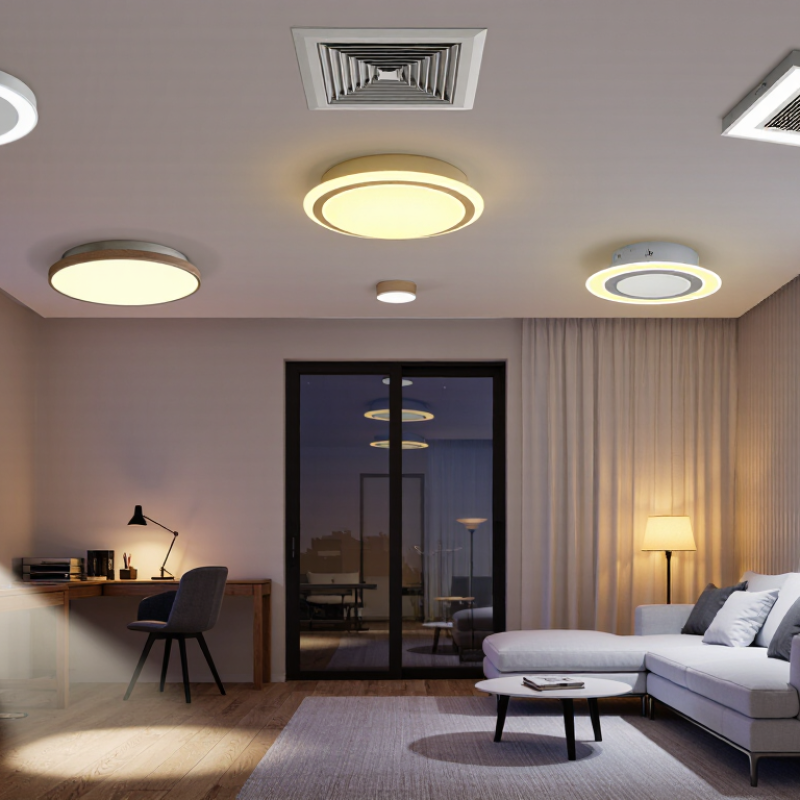
Understanding LED Light Types and Their Main Uses
Choosing an LED light starts with its type, not its advertised brightness. A standard bulb suits bedrooms, hallways, and table lamps. Its wide beam spreads light gently across a room. Directional spotlights work better for artwork, shelves, or kitchen counters. They concentrate light, so the same lumen rating may feel brighter in one place.
LED panels provide even illumination in offices, classrooms, and workshops. Strip lights fit under cabinets, inside display units, or along stair edges. Outdoor floodlights cover driveways and gardens, but their beam angle matters. Narrow beams create stronger highlights, while wide beams reduce harsh shadows. Check lumens rather than watts. Watts describe energy use, while lumens describe visible output.
Color temperature also changes how brightness feels. Warm white creates a relaxed atmosphere, while cool white can support detailed tasks. A high color rendering index helps food, fabrics, and skin look more natural. In my experience, a glossy diffuser can soften glare but may reduce useful light slightly. I once chose a powerful spotlight for a small desk and found it uncomfortable. The light was bright, yet poorly aimed. Measure the space, check the beam angle, and test the fixture at eye level when possible. No chart replaces that practical check.
Checking Lumens, Wattage, and Color Temperature
Choosing LED lighting becomes easier when you read three numbers: lumens, wattage, and color temperature. Lumens show the visible light produced by a lamp. More lumens usually mean a brighter room. A 1,000-lumen bulb can feel strong in a small desk lamp. It may feel weak in a large kitchen with dark cabinets. Room size, shade design, wall color, and mounting height all change the result. I have found that comparing lumens is more useful than comparing watts. Wattage measures electricity use, not brightness. A modern LED can produce high light output with modest power consumption. Check the package for both figures. Do not assume higher wattage always gives better lighting.
Color temperature affects how that brightness feels. Warm white, often around 2700–3000K, creates a softer atmosphere for bedrooms and living areas. Neutral white, near 3500–4100K, can suit kitchens, offices, and reading corners. Cooler light may look crisp, but it can feel harsh at night. The Kelvin number does not measure brightness. It describes the light’s visual tone. For dependable choices, look for tested performance data and a stated lumen rating. If possible, compare samples in your actual room under the same shade. My own choices have not always worked. A bright bulb looked impressive in a shop, then created glare at home. Dimming compatibility matters too. A non-dimmable lamp on a dimmer may flicker or perform poorly. Small details matter.
Identifying the Factors That Affect LED Brightness
Choosing an LED light starts with a practical question: what controls the brightness you actually see? Rated lumen output matters, but it is not the whole story. Lumens measure total visible light, while lux describes light reaching a surface. A lamp can produce many lumens yet look weak on a desk if its beam is wide or poorly aimed. In my testing, moving the same fixture 30 centimeters changed the reading noticeably. Small distances matter.
LED brightness depends on electrical current, driver quality, and heat control. Excess heat can reduce output and shorten service life. A stable driver usually keeps brightness more consistent than an unsuitable power supply. Check the fixture’s input requirements carefully. The lens, reflector, and diffuser also shape perceived brightness. Clear optics create sharper light, while frosted covers reduce glare but may absorb some output. Color temperature affects perception, too. Cooler white light often appears brighter than warm white at equal lumen levels.
Wall color, ceiling height, shadows, and nearby windows can change the result. Dark paint absorbs light, while pale surfaces reflect it around a room. Dimming compatibility matters, especially when low brightness is needed. Flicker may feel uncomfortable even when output seems adequate. LEDs also lose output gradually with age. I once judged a light by its package rating alone, and that was a poor shortcut. Compare lumens, beam angle, thermal design, and measured lux in the actual space. The specification sheet helps, but real placement decides the final impression.
How to Choose LED Lights: What Affects Their Brightness?
Distance is a major factor affecting observed LED brightness. Under ideal point-source conditions, illuminance follows the inverse-square law: doubling the distance reduces illuminance to one-quarter. LED current, heat, lens design, diffuser material, and power-supply efficiency also influence the actual light output.
The chart uses relative illuminance values normalized to 100 at 1 meter. These values are calculated from the physical relationship E ∝ 1/d².
Matching LED Lights to Room Size and Lighting Needs
How to Choose LED Lights What Affects Their Brightness?
Matching an LED light to room size starts with lumens, not watts. Lumens measure visible light output, while watts measure electricity use. The U.S. Department of Energy reports that modern LED products commonly deliver more than 80 lumens per watt. A small bedroom may need about 1,000–2,000 total lumens, depending on wall color, ceiling height, and furniture. A darker room often needs more light. Measure the space carefully.
Room activity matters just as much as floor area. Illuminating Engineering Society guidance commonly suggests around 10–20 footcandles for living areas, 30–40 for kitchens, and 50 for detailed office work. For a 120-square-foot kitchen, that can mean roughly 3,600–4,800 lumens before adjusting for cabinets or dark surfaces. Use several fixtures instead of one harsh ceiling lamp. Add under-cabinet lighting where food preparation happens. Keep some flexibility.
Color temperature also changes perceived brightness. A 3,000K warm-white lamp may feel softer than a 4,000K neutral-white lamp with the same lumen rating. The U.S. Department of Energy’s Solid-State Lighting reports emphasize efficacy, optical control, and visual comfort, not brightness alone. Glare can make a bright room uncomfortable. That lesson is easy to miss. I have found that lumen calculations rarely match real rooms perfectly, especially when shades, aging eyes, or glossy surfaces are involved. Recheck the result at night, and choose dimmable lighting when the space serves several purposes.
How to Choose LED Lights What Affects Their Brightness? - Matching LED Lights to Room Size and Lighting Needs
| Room or Lighting Area |
Typical Area |
Recommended Illuminance |
Estimated Total LED Output |
Suitable LED Fixture Types |
Recommended Color Temperature |
Recommended CRI |
Brightness and Selection Notes |
| Small Bedroom |
100–150 sq. ft.
(9–14 m²) |
100–200 lux for general lighting |
1,500–3,000 lm |
Ceiling fixture, flush mount, or several recessed lights |
2700–3000 K |
80+ |
Use lower output for a restful atmosphere. Add a bedside lamp for reading instead of making the ceiling light excessively bright. |
| Large Bedroom |
150–250 sq. ft.
(14–23 m²) |
100–200 lux for general lighting |
2,000–4,000 lm |
Central ceiling fixture combined with wall or bedside lighting |
2700–3000 K |
80+ |
Multiple lower-output fixtures can provide more even light than one very bright source. |
| Living Room |
150–300 sq. ft.
(14–28 m²) |
100–200 lux for ambient lighting |
2,000–6,000 lm |
Dimmable ceiling light, recessed lights, floor lamps, or wall sconces |
2700–3500 K |
80+ |
Choose dimmable LEDs when the room is used for both relaxing and social activities. Layered lighting reduces glare and shadows. |
| Dining Area |
80–150 sq. ft.
(7–14 m²) |
150–300 lux |
1,500–3,500 lm |
Pendant light or chandelier with a diffused LED source |
2700–3000 K |
80+ |
Select a fixture that distributes light across the table without exposing occupants to harsh glare. |
| Kitchen |
100–200 sq. ft.
(9–19 m²) |
300–500 lux for general lighting |
3,000–7,000 lm |
Recessed or ceiling lights plus under-cabinet task lighting |
3000–4000 K |
80+; 90+ for food preparation |
Prioritize light on work surfaces. Under-cabinet LEDs help prevent shadows cast by wall cabinets. |
| Bathroom |
40–100 sq. ft.
(4–9 m²) |
200–300 lux for general lighting;
300–500 lux at the mirror |
1,500–3,500 lm |
Moisture-suitable ceiling fixture and vertical mirror lights |
3000–4000 K |
80+; 90+ for accurate skin tones |
Use fixtures rated for the intended damp or wet location. Place mirror lighting at both sides or evenly around the face to reduce shadows. |
| Home Office |
80–150 sq. ft.
(7–14 m²) |
300–500 lux |
2,000–4,000 lm |
Ceiling light, adjustable desk lamp, or indirect task lighting |
3500–5000 K |
80+; 90+ preferred |
Avoid placing bright sources directly in the field of view or where they reflect on a monitor. A dimmer helps accommodate different tasks. |
| Hallway or Entryway |
30–100 sq. ft.
(3–9 m²) |
100–200 lux |
500–1,500 lm |
Flush-mount ceiling light, recessed lights, or wall sconces |
2700–3500 K |
80+ |
Even distribution is more important than high output. Use occupancy or motion controls where appropriate. |
| Stairway |
Varies by layout |
100–200 lux on steps |
800–2,000 lm |
Ceiling lights, wall lights, or step lights |
2700–4000 K |
80+ |
Reduce dark areas and glare. Use multiple fixtures or controls at both ends of the stairs when possible. |
| Reading or Craft Area |
Task-specific area |
300–750 lux on the task surface |
500–1,500 lm at the task |
Adjustable desk lamp, floor lamp, or directional task light |
3000–4000 K |
90+ preferred |
Measure the light at the work surface rather than relying only on the lamp’s lumen rating. Choose a shielded, adjustable fixture to control glare. |
Comparing Efficiency, Lifespan, and Dimming Compatibility
How to Choose LED Lights: What Affects Their Brightness?
Brightness depends on lumens, not watts. Lumens describe the visible light produced by an LED lamp. Watts only measure electrical energy consumption. A high-efficiency lamp can deliver more lumens while using fewer watts. Check the lumens listed on the package, then consider the room size, ceiling height, and surface colors. Dark walls absorb light, while pale walls reflect it.
Efficiency also influences long-term value. Look for strong lumens-per-watt performance and a suitable color temperature for the space. Lifespan depends on heat control, driver quality, usage hours, and ventilation. An LED installed inside a tightly enclosed fixture may age faster than expected. I have seen brightness decline gradually, even when the lamp still worked. Rated life is useful, but it is not a guarantee for every home.
Tips: Match the dimmer with the LED’s dimming method. Some lamps need a compatible trailing-edge dimmer, while others may flicker or buzz with older controls. Test the lowest setting before buying several lamps. Check for stable brightness, smooth adjustment, and acceptable color changes. A lamp can be efficient and long-lasting, yet unsuitable for dimming. That detail is easy to miss.
FAQS
Lumens measure visible light output. More lumens usually create a brighter room. A 1,000-lumen bulb may suit a small desk lamp.
No. Wattage measures electricity use, not brightness. Compare lumens and watts together. A lower-wattage LED can produce strong light.
Color temperature describes the light’s visual tone. Warm white, around 2700–3000K, feels softer. Neutral white, around 3500–4100K, looks clearer.
Warm white usually suits bedrooms and living rooms. It creates a calmer atmosphere. Cooler light may feel harsh at night.
A small bedroom may need about 1,000–2,000 total lumens. Dark walls or high ceilings may require more. Room conditions change the result.
A 120-square-foot kitchen may need roughly 3,600–4,800 lumens. Dark cabinets can increase that need. Under-cabinet lights help food preparation.
Beam angle, mounting height, shades, and surface color affect perceived brightness. A wide beam can spread light thinly. Placement matters.
Yes. A non-dimmable lamp on a dimmer may flicker or work poorly. Check compatibility before installation. Flicker can feel uncomfortable.
Check lumens, beam angle, driver quality, heat control, and measured lux. Compare the light in your actual room. My first choice looked impressive in a shop, but it caused glare at home.
Conclusion
Choosing the right LED light begins with understanding its type and intended use, whether for general room lighting, task illumination, accent lighting, or outdoor applications. When comparing options, pay attention to lumens for actual brightness, wattage for energy consumption, and color temperature for the atmosphere created. A higher wattage does not always mean a brighter light, so lumens are the more reliable measurement.
What affects the brightness of LED lights includes the bulb’s lumen output, beam angle, color temperature, power supply, diffuser design, installation position, and the condition of the fixture. Room size, ceiling height, wall colors, and the purpose of the space should also guide your choice. Finally, consider energy efficiency, expected lifespan, and whether the light supports dimming. Selecting an LED that matches both the room and your lighting needs can provide comfortable illumination while reducing energy use and maintenance.

 Guangyao Lighting