How to Recycle Old LED Lights Properly in 2026?

Time:2026-10-02 Author:Sienna
0%

Old LED bulbs may look harmless, yet their electronic parts, drivers, wires, and metal heat sinks deserve careful handling. In 2026, learning How to recycle old LED lights properly can reduce landfill waste and recover useful materials. A discarded bulb should not automatically enter a glass-bottle bin. LED products contain mixed components that ordinary curbside systems may reject.

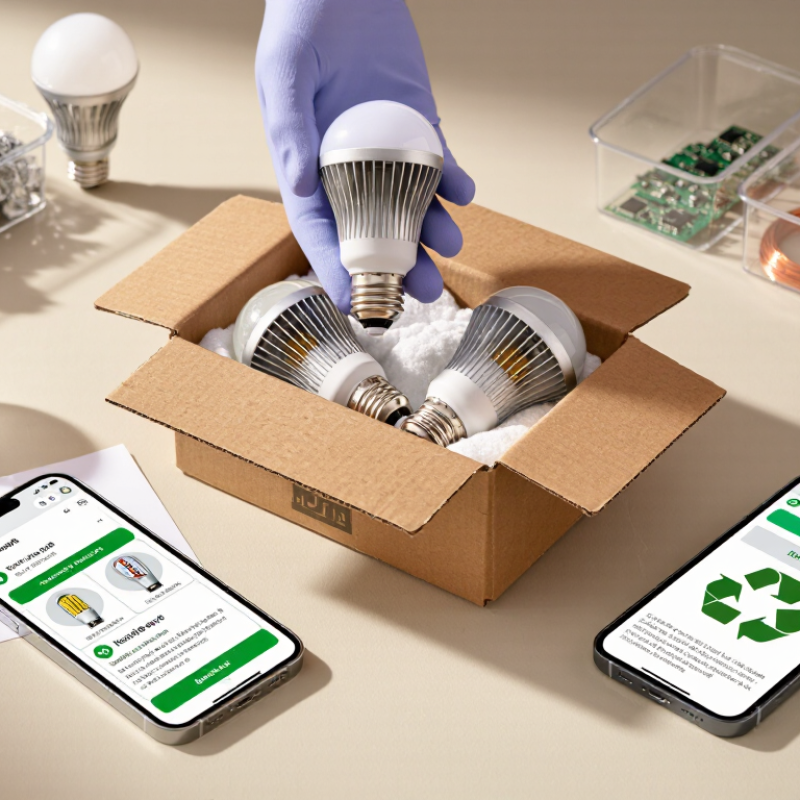
William McDonough, a leading circular-design expert, said, “Waste equals food.” This simple idea guides responsible LED recycling. The goal is not merely disposal. It is keeping aluminum, copper, circuit boards, and plastics in productive use. Remove the bulb gently, keep it dry, and place it in a small box to prevent breakage. Do not crush it or separate its parts with household tools. Check your local waste authority, lighting retailer, or certified e-waste facility before transport. Collection rules differ between cities, countries, and product types.

The process is not perfectly uniform. Some programs accept LED lamps, while others accept complete fixtures only. That uncertainty can cause mistakes. A quick phone call is often better than guessing. Keep receipts or drop-off details when a local program provides them. They create a useful record and help confirm proper handling.

This guide will explain how to identify recyclable LED products, prepare them safely, and choose a trustworthy collection route. It will also examine common errors, including mixing bulbs with regular glass recycling. Small decisions matter here. One box can prevent unnecessary contamination.
How to Recycle Old LED Lights Properly in 2026?

Identify LED Types: ENERGY STAR Reports 75% Less Energy and 25× Longer Life

Before recycling an old light, identify its type. Look for “LED” on the base, bulb, or packaging. An LED usually feels solid and contains electronic parts, not a glass tube filled with gas. Compact fluorescent lamps often show “CFL” and require different handling because they contain small amounts of mercury. Halogen bulbs become extremely hot and usually need separate guidance.

Certified efficiency data reports that LED lights use about 75% less energy than incandescent bulbs. They can also last up to 25 times longer. That longer life reduces replacements, packaging, and transport. Still, an LED is not ordinary household rubbish everywhere. Local collection rules differ. Check your council’s waste page or an approved electronics facility before disposal.

Switch off the fixture and let the bulb cool. Remove it gently, without twisting the glass dome. Place loose bulbs in a small box, not a thin shopping bag. Never crush, burn, or dismantle them. If the label is faded, my first guess may be wrong. Treat the lamp as unknown and ask the collection site. Integrated LED panels may need electronic-waste recycling, while detachable bulbs may have a dedicated drop-off route. Take damaged bulbs in a sealed container and mention the damage when handing them over.

Check Local Rules: EU WEEE Requires a 65% Collection Rate for E-Waste

Old LED lights should not go into ordinary household waste. In the European Union, they are generally treated as waste electrical and electronic equipment under WEEE rules. A proper collection point can separate glass, metals, electronic parts, and other materials more safely.

The EU WEEE framework sets a 65% collection target for e-waste in many cases. This figure is usually calculated from the average weight of electrical equipment placed on the market during the previous three years. It can also relate to 85% of the WEEE generated in a country. The target applies at national system level, not as a personal recycling quota. Local rules still matter.

Check your municipal website before carrying the lamp anywhere. Some areas accept LED bulbs at civic recycling centres, while others use retailer take-back services or scheduled collection events. Keep damaged bulbs in a small box to prevent cuts. Do not crush them or mix them with food containers. If the light contains a removable battery, follow separate battery guidance.

A useful habit is photographing the collection instructions before leaving home. Rules and opening hours can change. I used to assume every electrical shop accepted old LEDs, but that is not always true. A quick phone call can prevent a wasted trip. Even a small household delivery helps collection systems approach the 65% target.

Prepare Safely: Separate LED Bulbs from Mercury Lamps and Batteries

How to Recycle Old LED Lights Properly in 2026?

Prepare Safely: Separate LED Bulbs from Mercury Lamps and Batteries

An old LED bulb usually contains no mercury, but it still needs careful handling. Do not place it with mercury lamps, loose batteries, or broken glass. I once treated every failed lamp as ordinary glass. That shortcut was wrong. Some fixtures include separate batteries, sensors, or fluorescent tubes. Remove these parts only when the design allows safe separation. Never break a lamp to identify it. The Global E-waste Monitor 2024 reported 62 million tonnes of electronic waste worldwide in 2022. Only 22.3% was formally collected and recycled. That gap makes correct sorting important.

Tips: Keep LED bulbs in a small box. Wrap broken pieces carefully. Tape battery terminals before transport. Store mercury-containing lamps upright and unbroken. Use a local household hazardous-waste or electrical recycling site. Ask the facility whether it accepts LEDs, batteries, and mercury lamps separately. Collection rules differ by location.

Read the symbols and product information before disposal. A battery compartment may hide inside the base. Some older lighting products may also contain mercury, especially fluorescent or compact fluorescent lamps. The United States Environmental Protection Agency advises recycling mercury lamps through suitable collection programs. Do not place them in general glass recycling. The International Energy Agency also notes that LED adoption can reduce lighting energy use, but disposal systems must keep improving. That part is often overlooked. Better recycling begins with patient separation, not a crowded waste bin.

Choose Certified Recyclers: Use EPA-Listed or WEEE-Compliant Collection Sites

How to Recycle Old LED Lights Properly in 2026?

Old LED bulbs should go to certified electronics recyclers, not mixed household bins. Their plastic shells, circuit boards, and metal heat sinks require controlled sorting. The Global E-waste Monitor 2024 reported 62 million tonnes of electronic waste in 2022. Only 22.3% was formally collected and recycled. That gap makes recycler selection important.

Choose collection sites listed by local environmental agencies or EPA-recognized certification directories. In Europe, look for facilities operating under WEEE-compliant systems. Ask whether the site accepts LED lamps, separates components, and provides downstream recycling records. A proper facility should explain where materials travel. Vague answers deserve caution. The collection logo alone is not proof.

Tips: Photograph the recycler’s certification before drop-off. Remove batteries or detachable parts only when instructions permit. Never place broken lamps in regular trash. Store them in a rigid box, using paper padding. Keep receipts for larger quantities. The process can feel excessive for one bulb, but small items accumulate quickly. The Global E-waste Monitor projects annual e-waste could reach 82 million tonnes by 2030. I still find recycling labels confusing sometimes; checking twice is better than trusting a familiar-looking symbol.

How to Recycle Old LED Lights Properly in 2026? — Choose Certified Recyclers: Use EPA-Listed or WEEE-Compliant Collection Sites
LED Item Typical Materials Special Handling Recommended Collection Route Certification or Compliance Check Preparation Before Drop-Off Disposal Status
LED Bulb or Replacement Lamp Glass or plastic diffuser, aluminum heat sink, printed circuit board, semiconductor components, copper wiring and small electronic parts. LED lamps are not designed to contain mercury, unlike fluorescent and compact fluorescent lamps. They should still be handled as electronic waste where local rules require it. Use a municipal household hazardous-waste, e-waste or lamp-recycling collection site that explicitly accepts LED lamps. Confirm acceptance in the current local or state environmental-authority directory. Prefer a recycler with recognized electronics-recycling certification or documented WEEE compliance. Remove the lamp from the fixture. Keep intact lamps in a rigid container during transport and do not mix them with food, glass or paper recycling. Recycle through an approved program
Integrated LED Fixture Metal housing, heat sink, LED modules, driver, wiring, plastic components and electronic circuit boards. Fixtures are larger and may contain separate electronic components. Disconnect power before removal; do not dismantle energized equipment. Use an e-waste collection center or an electrical-equipment take-back service that accepts complete lighting fixtures. Verify that the site accepts whole fixtures, not only loose lamps. For EU shipments or facilities, check that the handling process covers WEEE electrical and electronic equipment. Remove detachable bulbs only if the instructions allow it. Keep mounting hardware together and protect exposed wires or sharp metal edges. Recycle as electronic equipment
Smart LED Bulb or Connected Lamp LED light engine, driver, wireless communication module, circuit board, plastic or glass housing and metal heat sink. Smart lamps normally do not contain a user-replaceable battery. If a separate battery is present, it must follow the applicable battery-recycling rules. Use an e-waste collection site that accepts connected lighting and small electronic devices. Check the collection site's accepted-device list and confirm that electronics are sent to a certified downstream processor rather than landfill disposal. Reset the device if required, remove personal account connections, and protect the lamp from breakage. Do not place loose batteries in the lamp-recycling container. Recycle as electronic waste
LED Strip, Tape or Under-Cabinet Light Flexible circuit board, LEDs, resistors, copper conductors, adhesive backing, plastic coating and an external power supply or driver. Separate detachable power adapters only when safe. Do not cut or burn the strip to recover metal or copper. Use a small-electronics or e-waste collection site that accepts lighting strips, adapters and low-voltage equipment. Confirm whether the site accepts power supplies and mixed electronic accessories. Use a site with documented electronics recycling controls. Coil the strip loosely, secure loose wires, and place the adapter with the same equipment if accepted. Recycle through e-waste collection
LED Floodlight or Outdoor Fixture Aluminum or steel housing, glass or polycarbonate lens, LED module, driver, seals, wiring and mounting components. Outdoor units may contain dirt, moisture or damaged glass. Treat broken glass and exposed wiring as physical hazards. Use a commercial or household e-waste facility that accepts lighting fixtures and outdoor electrical equipment. Ask whether the facility is authorized for the relevant electrical-waste category and whether it provides downstream processor documentation. Disconnect electricity, remove loose dirt without creating dust, cover broken glass, and package the fixture to prevent injury. Recycle as a complete fixture
Damaged or Broken LED Lamp Broken glass or plastic, electronic components, metal parts and possible sharp fragments. Do not touch fragments with bare hands, vacuum immediately, or place pieces in a recycling cart. Avoid crushing or compacting the lamp. Contact the local environmental authority or collection facility before transport and follow its damaged-electronics instructions. Use only a site that confirms it accepts damaged lamps and provides safe packaging or handling instructions. Wear gloves, collect fragments with stiff cardboard or tape, place them in a sealed rigid container, and label the container as broken lighting. Call the facility first
Fluorescent or Compact Fluorescent Lamp Glass tube, phosphor coating, metal electrodes and a small quantity of mercury vapor or mercury compounds. This is not an LED lamp. Mercury-containing lamps require separate handling and must not be broken or placed in ordinary trash where prohibited. Use a household hazardous-waste or lamp-recycling program specifically approved for mercury-containing lamps. Confirm that the site is authorized to accept mercury-containing lamps under the applicable national, state or local rules. Keep lamps intact in their original packaging or a rigid protective container. Never tape fluorescent tubes together in a way that may cause breakage. Use a mercury-lamp program
Large Quantity from a Business or Property Mixed lighting equipment, drivers, fixtures, wiring, metals, plastics and electronic assemblies. Commercial quantities may be subject to waste-profile, transport, recordkeeping and local regulatory requirements. Arrange a scheduled pickup or palletized delivery with a qualified electronics or lighting recycler. Request current certification details, acceptance terms, downstream-management information and a recycling or destruction certificate when required. Sort lamps from fixtures, prevent breakage, count units, photograph loads if needed, and retain manifests or receipts. Use documented commercial recycling
Important 2026 guidance: Acceptance rules vary by country, state and municipality. Do not assume that a curbside recycling program accepts LED lamps. In the United States, verify the current local or state collection directory and ask whether the facility is authorized for the specific lamp or fixture. In the European Union, use a collection point operating under the applicable WEEE requirements; the crossed-out wheeled-bin symbol indicates separate collection for electrical and electronic equipment. Keep receipts, manifests or recycling certificates for business shipments.

Verify Final Processing: Confirm Material Recovery and Responsible E-Waste Handling

How to Recycle Old LED Lights Properly in 2026?

Recycling an old LED light does not end at the collection bin. The critical question is what happens afterward.

The Global E-waste Monitor 2024 reported 62 billion kilograms of e-waste worldwide in 2022. Only 22.3% was documented as formally collected and recycled. LED lamps contain circuit boards, drivers, wires, aluminum heat sinks, and glass.

Verify final processing before handing over your lamps. Ask the recycler for its operating authorization, downstream facility details, and recent processing records. Request weight tickets, processing dates, and a clear chain-of-custody document.

Material recovery reports should separate aluminum, copper, glass, plastics, and unrecovered residues. A vague certificate is not enough. Real evidence matters.

The U.S. Environmental Protection Agency reported that only 38.5% of consumer electronics were recycled in 2018. That figure is not LED-specific, but it shows the gap between collection and recovery.

I would photograph the lamp’s condition, record its approximate weight, and keep the receipt. Still, receipts can prove delivery, not full recovery.

Ask whether an independent audit confirms the final processor’s claims. Small collection programs may not provide perfect documentation. That limitation deserves honest attention.

FAQS

Can old LED bulbs go into ordinary household waste?

Usually, no.

What does the 65% collection target mean?

It is a national system target, not a personal recycling quota.

Where can I take old LED bulbs?

Check your municipal website before travelling.

How should I carry a damaged LED bulb?

Place it inside a small, sturdy box.

Should LED bulbs be separated from other lamps?

Yes.

What if the lighting product contains a battery?

Follow separate battery collection guidance.

Do all old lighting products contain mercury?

No.

How can I check whether recycling really occurred?

Ask about operating authorization, downstream facilities, processing dates, and weight records.

Is formal recycling already widespread?

Not enough.

What information should I keep after disposal?

Photograph the lamp, note its approximate weight, and save the collection receipt.

Conclusion

How to recycle old LED lights properly begins with identifying what you have. LED bulbs generally use much less energy and last far longer than traditional lighting, but they should still be handled as electronic waste at the end of their life. Check your local recycling rules because collection requirements and accepted materials can vary. Before disposal, separate LED bulbs from mercury-containing lamps, batteries, and other devices to prevent contamination and ensure safe handling.

Next, take the bulbs to a certified electronic-waste collection site or an approved recycling center that follows recognized environmental standards. Avoid placing LED lights in regular household recycling unless your local program specifically accepts them. When possible, ask how the facility processes collected lighting and whether it recovers useful materials responsibly. Confirming that the final processor uses safe sorting, material recovery, and environmentally responsible disposal practices helps reduce waste and supports a more sustainable lighting cycle.

Sienna

Sienna

Sienna is a skilled marketing professional with a deep expertise in our company’s core products and services. With a passion for innovation and detail, she plays a pivotal role in crafting insightful blog posts that not only highlight the unique features of our offerings but also provide valuable......