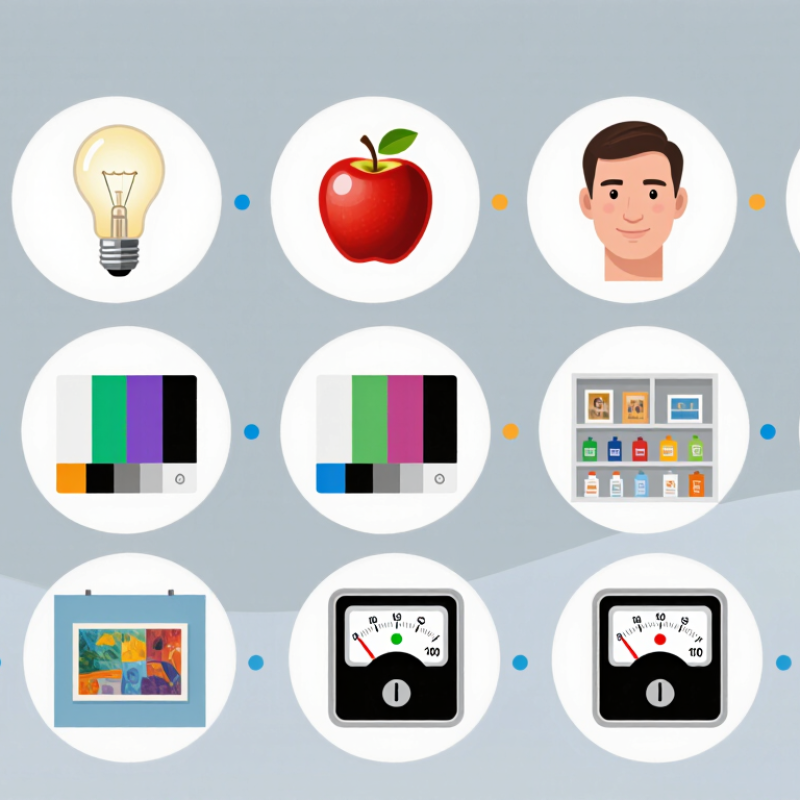
What is CRI and why it matters for LED lights is a practical question for designers, buyers, and facility managers. Color Rendering Index, or CRI, indicates how naturally a light source reveals familiar colors. Under high-CRI light, a red apple appears rich, skin looks less gray, and printed labels remain easier to distinguish.
The U.S. Department of Energy’s Solid-State Lighting reports explain that modern LED products can achieve CRI values above 90. However, the same research warns that CRI does not fully describe color quality, saturation, or visual preference. That limitation matters. A lamp can advertise CRI 90 yet render deep red objects weakly. The number is useful, but incomplete.
The Illuminating Engineering Society’s TM-30 method addresses this gap by examining fidelity, gamut, and color-vector behavior across many color samples. NIST color-science researcher Yoshi Ohno has stated, “Color rendering is not a single-dimensional concept.” His observation supports a broader evaluation of LED performance, especially in retail, healthcare, hospitality, museums, and residential spaces.
The International Energy Agency reports that lighting represents roughly 15% of global electricity consumption. Efficiency matters, but visual quality matters too. Poor color rendering can affect product appearance, material inspection, comfort, and purchasing decisions.
CRI is not a magic score. Still, it remains a valuable starting point. This article examines the top 10 reasons why CRI matters for LED lights, while recognizing that better decisions require spectrum data, application experience, and careful testing.
What CRI Means in LED Lighting
Color Rendering Index, or CRI, describes how accurately a light source reveals colors compared with a reference light. Its scale usually runs from 0 to 100. A higher score generally means more natural-looking colors. However, CRI is not a complete picture. The CIE 13.3-1995 method calculates general CRI, known as Ra, from eight pastel color samples. It excludes strong red, which can matter in food displays, artwork, and skin tones.
That gap is important. An LED rated CRI 90 may still render red objects weakly or unnaturally. The IES TM-30-20 method evaluates 99 color samples and reports Fidelity Index, Rf, plus Gamut Index, Rg. These measurements show whether colors remain accurate or become overly vivid. They also reveal shifts that one CRI number can hide. The weakness is easy to miss.
In practical lighting evaluations, I look beyond the package rating. A CRI 80 lamp may suit a warehouse, while a CRI 90 or higher source can improve a gallery, clinic, kitchen, or clothing store. Yet higher CRI does not automatically create better light. Spectrum, color temperature, glare, and dimming behavior also affect visual comfort. The U.S. Department of Energy reports that modern LEDs can use at least 75% less energy than incandescent lighting, but efficiency should not replace color evaluation. Sometimes, the best specification is not the highest number. It is the most honest description of the space.
| No. | Reason | What CRI Means | Why It Matters in LED Lighting | Useful Guidance |
|---|---|---|---|---|
| 1 | More Natural-Looking Colors | Color Rendering Index (CRI) describes how accurately a light source reveals colors compared with a reference light source. | Higher CRI lighting generally makes illuminated objects appear closer to their intended colors. | CRI 80 or higher is commonly suitable for general indoor lighting; higher values may be preferred where color accuracy is important. |
| 2 | Better Visual Comfort | Accurate color relationships can make visual details easier to interpret under the light. | Balanced, natural color appearance may reduce the need to compensate for colors that look dull, distorted, or unclear. | CRI is only one factor in visual comfort. Glare, flicker, brightness, color temperature, and uniformity also affect comfort. |
| 3 | Improved Retail Presentation | CRI indicates how faithfully a light source shows the colors of products and materials. | Accurate rendering helps merchandise, packaging, fabrics, food, and finishes appear more representative of their actual colors. | Retail applications often consider CRI 90 or higher, while also checking red rendering and the complete spectral performance. |
| 4 | More Reliable Color Matching | The general CRI value is based on a set of reference color samples, traditionally including eight pastel color samples. | Higher color fidelity supports tasks such as selecting paint, comparing textiles, inspecting finishes, and evaluating printed materials. | For demanding applications, review additional metrics such as R9 and TM-30 rather than relying on the general CRI value alone. |
| 5 | Useful for Healthcare Environments | Color rendering affects how clearly skin tones, tissue colors, and other visual indicators are perceived. | Appropriate color quality can support observation and routine visual tasks in clinics, examination rooms, and care settings. | Healthcare specifications vary by task and local requirements. High CRI should be combined with suitable illuminance, glare control, and low flicker. |
| 6 | Better Food Appearance | Different light spectra can change the apparent color and freshness of food. | Well-selected LED lighting can present food in a more appealing and believable way without changing the food itself. | The best spectrum depends on the food category. High CRI alone does not guarantee the ideal appearance for every product. |
| 7 | Supports Art and Museum Display | Color fidelity is important when viewers need to perceive subtle differences in paintings, photographs, textiles, and objects. | Higher-quality light can help preserve the intended appearance of artwork while supporting accurate visual evaluation. | Display lighting must also address ultraviolet exposure, infrared heat, illuminance limits, glare, and conservation requirements. |
| 8 | Helps Workspace Task Accuracy | CRI provides an indication of how lighting reproduces the colors used in visual tasks. | Suitable color rendering can help with reading charts, identifying cables, sorting materials, and reviewing documents or samples. | For many offices and work areas, CRI 80 or higher is a practical baseline; specialized tasks may require a higher specification. |
| 9 | Improves Design Consistency | LED products with similar CRI ratings may still differ in spectrum, color temperature, and color quality. | Checking the full lighting specification helps maintain a consistent appearance across rooms, fixtures, and replacement lamps. | Compare CRI, correlated color temperature (CCT), chromaticity tolerance, R9, TM-30 data, and product-to-product consistency. |
| 10 | Supports Better Lighting Decisions | CRI is a performance indicator, not a complete measure of overall LED quality. | Understanding CRI helps users select lighting that matches the visual demands of a space instead of choosing only by wattage or brightness. | Evaluate CRI together with lumens, efficacy, CCT, beam distribution, lifetime, flicker performance, glare, dimming, and energy use. |
It helps colors appear more natural and easier to interpret. Skin, labels, fabric, and wiring may look clearer. It does not increase resolution.
No. A CRI 90 lamp may reproduce saturated red poorly. The rating can hide important weaknesses.
R9 measures strong red performance, which standard CRI calculations may overlook. Weak R9 can make fruit, wood, meat, or skin look dull.
Kitchens, retail areas, studios, workshops, bathrooms, and healthcare rooms often benefit. Small color differences matter there.
CRI 80 usually works for offices, corridors, and basic living spaces. Higher ratings may improve artwork, mirrors, and food preparation.
Yes. Warm light near 2700K can feel comfortable in bedrooms. Around 4000K may support clearer task visibility in workshops.
Yes. Excessive brightness, glare, flicker, or poor diffusion can reduce comfort. Good color quality cannot fix every lighting problem.
Place real materials under the fixture, including a white wall, ripe fruit, wood, and skin. Check them during daytime and evening. The specification sheet may not match your eyes.
What is CRI and why it matters for LED lights? Color Rendering Index (CRI) is a measurement of how accurately an LED light reveals the colors of objects compared with a natural reference light. A higher CRI generally produces more natural, balanced, and realistic colors, while a lower CRI may make colors appear dull, distorted, or less distinguishable. Understanding CRI helps users evaluate lighting quality beyond brightness and energy efficiency.
High-CRI LED lights can improve visual clarity, reduce color confusion, and create a more comfortable environment for daily activities. They are especially valuable in homes, retail spaces, offices, studios, kitchens, galleries, and areas where accurate color recognition is important. However, the ideal CRI depends on the application, desired atmosphere, budget, and lighting conditions. By considering CRI alongside color temperature, brightness, and energy use, users can choose LED lighting that supports both practical visibility and a more natural visual experience.

 Guangyao Lighting